 Developer & terminal tools
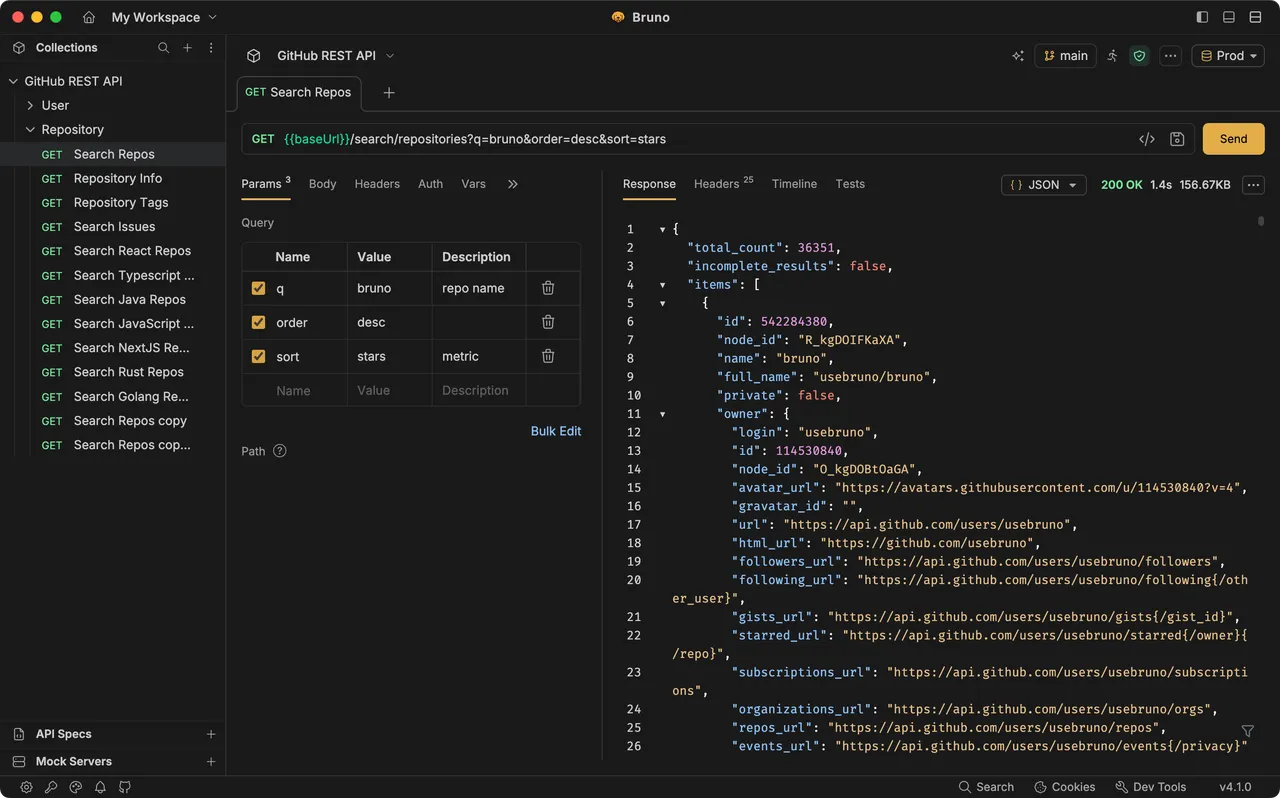
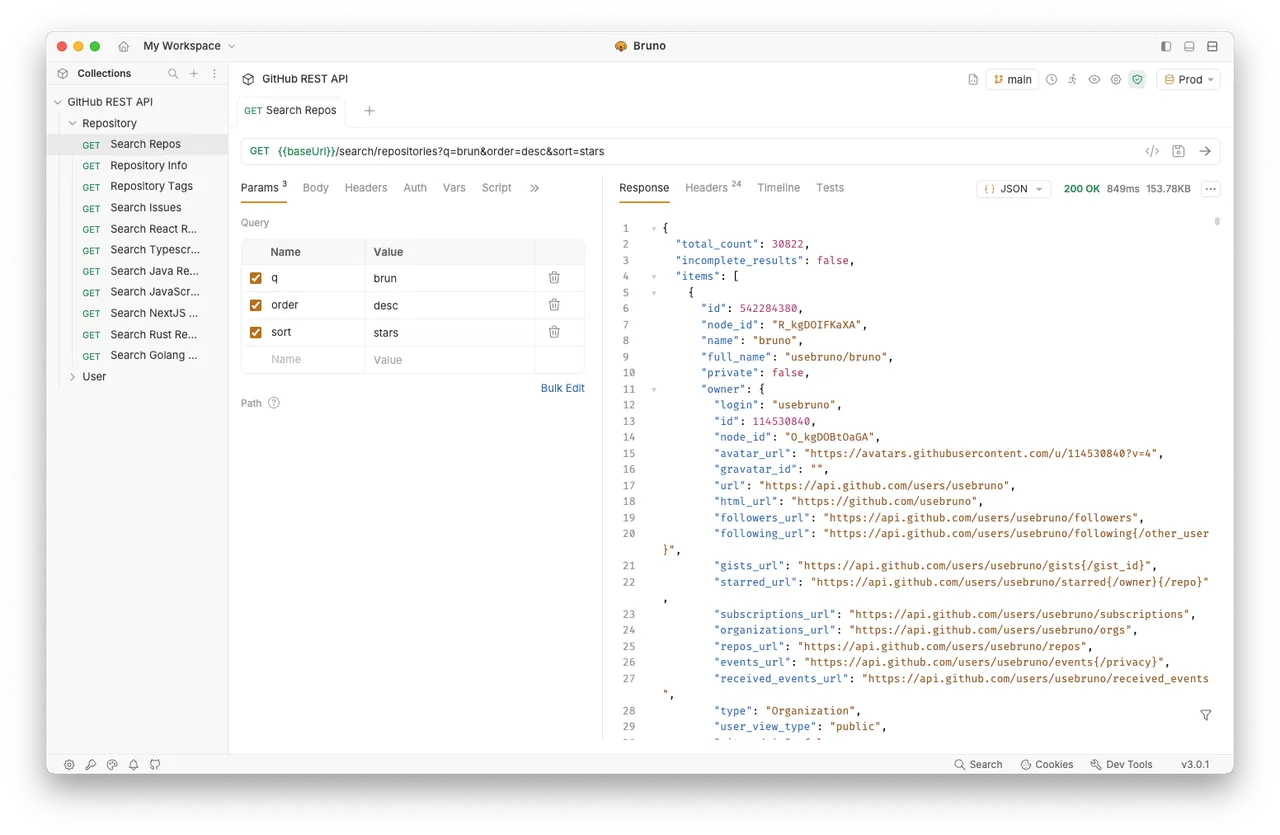
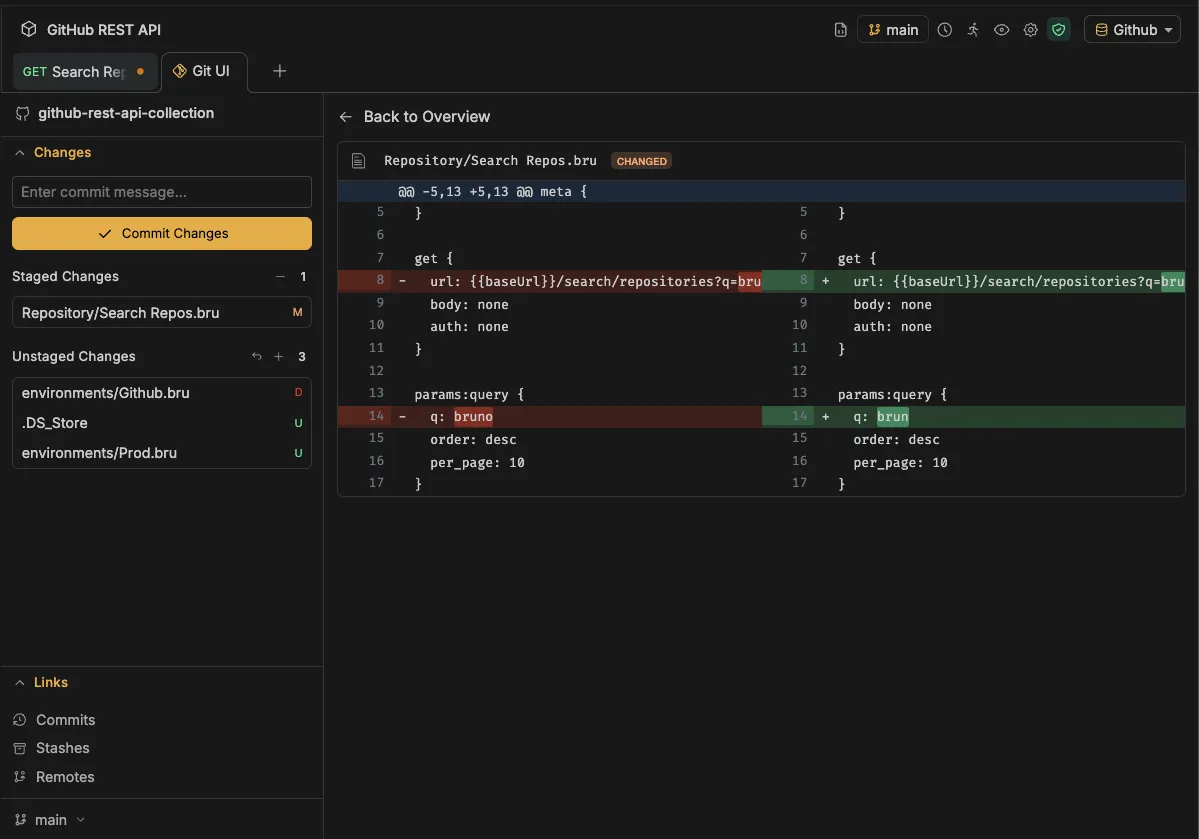
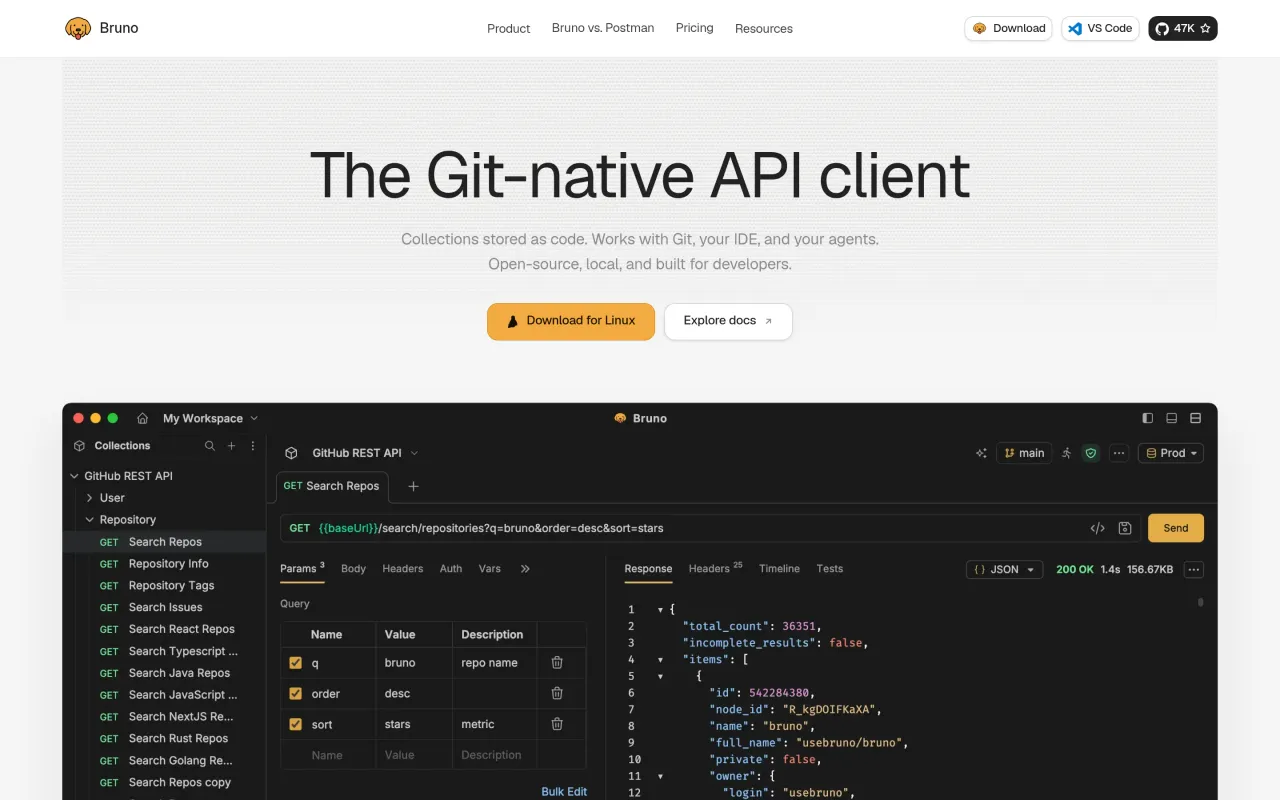
Bruno exists because of a specific annoyance: an API client that asks you to log in, then keeps your requests on its own servers and charges per seat to share them. Here a collection is a directory of text files in your repository. You commit it, someone reviews the diff, a branch changes an endpoint alongside the code that serves it, and the history lives where the rest of your history lives.
The app itself is ordinary in the good sense. Build a request, set headers and auth, define environments, write a pre-request or post-response script, add assertions, run a folder as a suite. Existing Postman and Insomnia collections import, so switching does not mean rebuilding everything by hand.
Read the pricing page carefully before you get attached, because this is the part people get wrong. The open-source app is free and stays free, and it is not a crippled demo. But the paid tiers are subscriptions, six or eleven dollars per user per month billed annually, and there is no lifetime option. If what you need is the deeper git workflow or team governance, you are buying a subscription, not escaping one.
It is Electron, so it is not light. If you live in the terminal, curl and
httpie with a checked-in shell script cover more ground than people admit.
 Ghostty
 iTerm2
 CodeRunner
 DevUtils