 Email, calendar & tasks
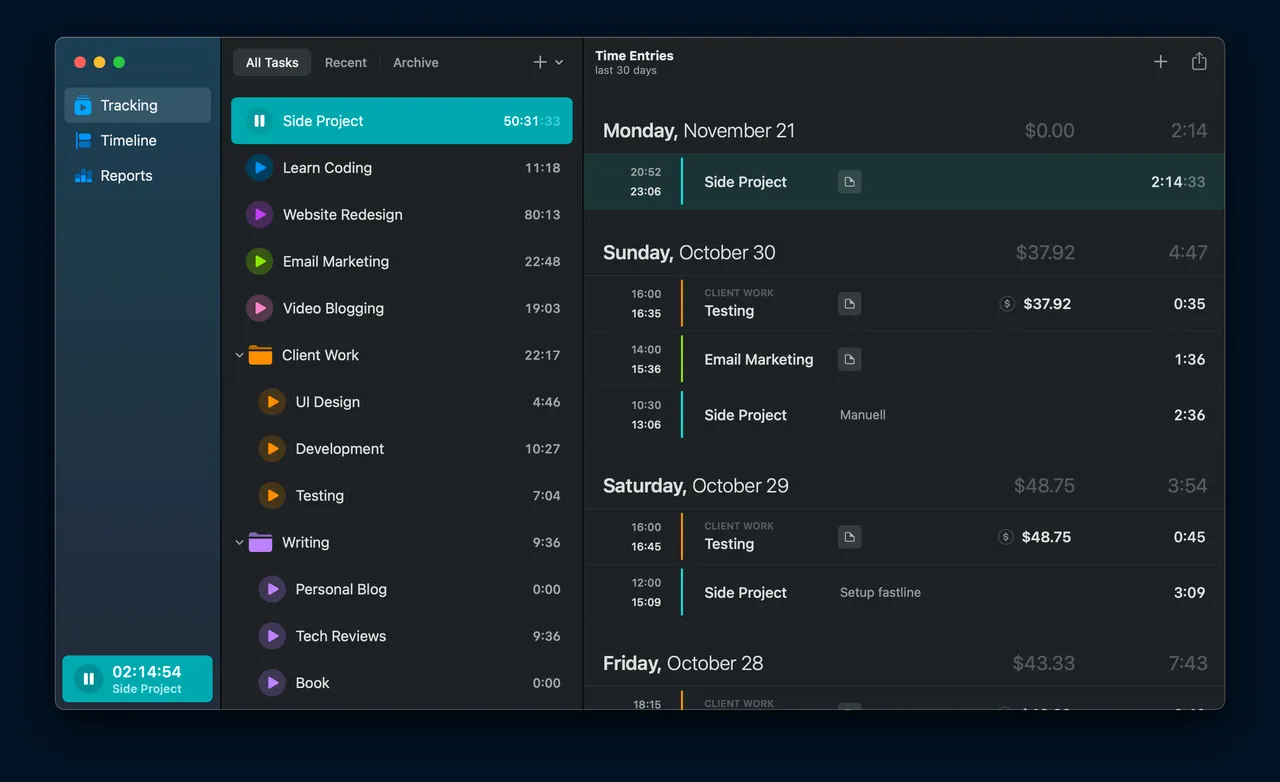
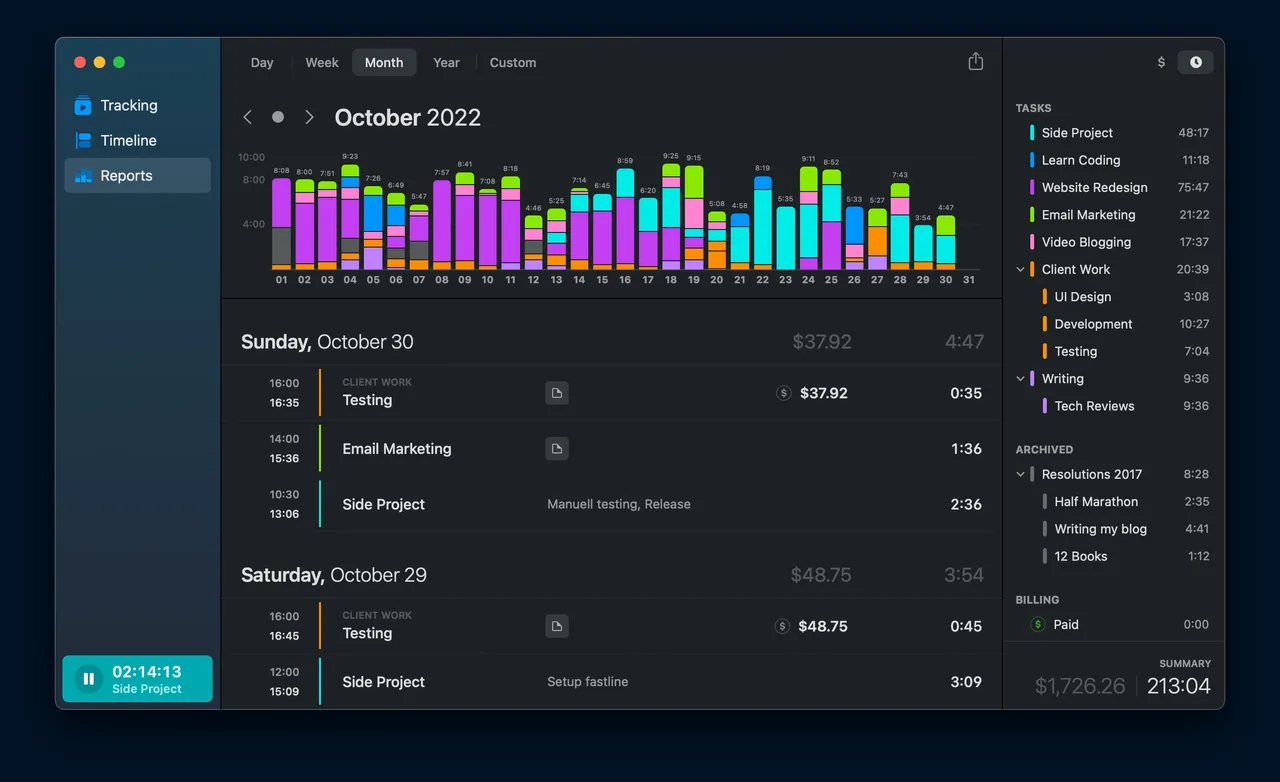
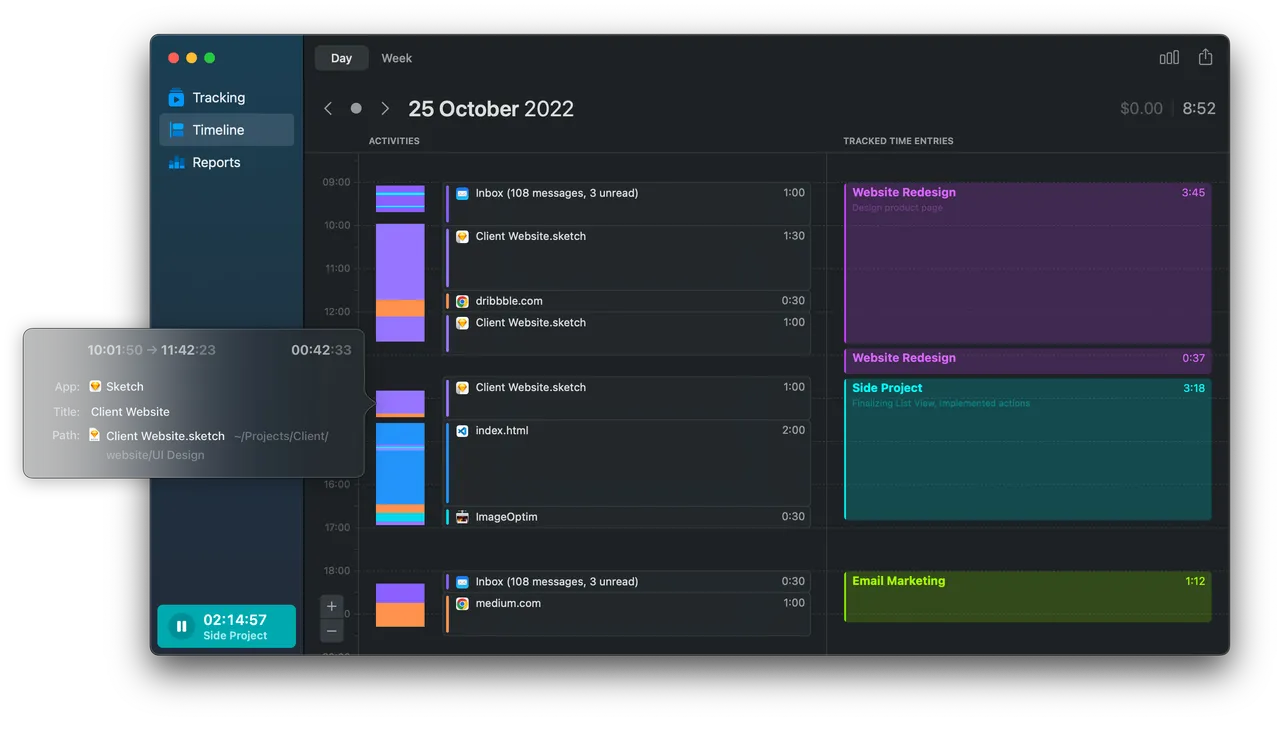
Timemator watches what you do and turns it into time entries. You tell it that any document inside a particular client folder counts as that client, that Figma counts as design work, that one Safari domain counts as research, and it starts and stops timers without you touching anything. When a rule does not exist yet you can still hit a button and time something by hand.
Everything lives in a local database on the Mac. There is no account to create and no server that has to stay up for the app to keep working, which is the structural reason a $39 payment can cover it at all while Toggl and Harvest bill you monthly forever.
That $39 activates two Macs. The iPhone app is a separate $7.99 purchase, and sync between the two is the part to test properly during the trial. Nothing on the site says whether a future major version would be a paid upgrade, so treat the silence as a maybe rather than a promise.
What it does not do is teams. No shared workspace, no seats, no approving anyone else's hours, no invoices — you get reports and a CSV export and you bill from somewhere else. If you track only your own hours, that is the entire job. If you need to see what four contractors did last week, a subscription is the honest answer. Check Setapp first too: Timemator is included, so a subscriber already has it.
 eM Client
 GoodTask
 SpamSieve
 2Do